

4-star campsite, Mer d'Iroise
Douarnenez Bay, South Finistère, Brittany
La Mer d’Iroise Campsite in Plomodiern
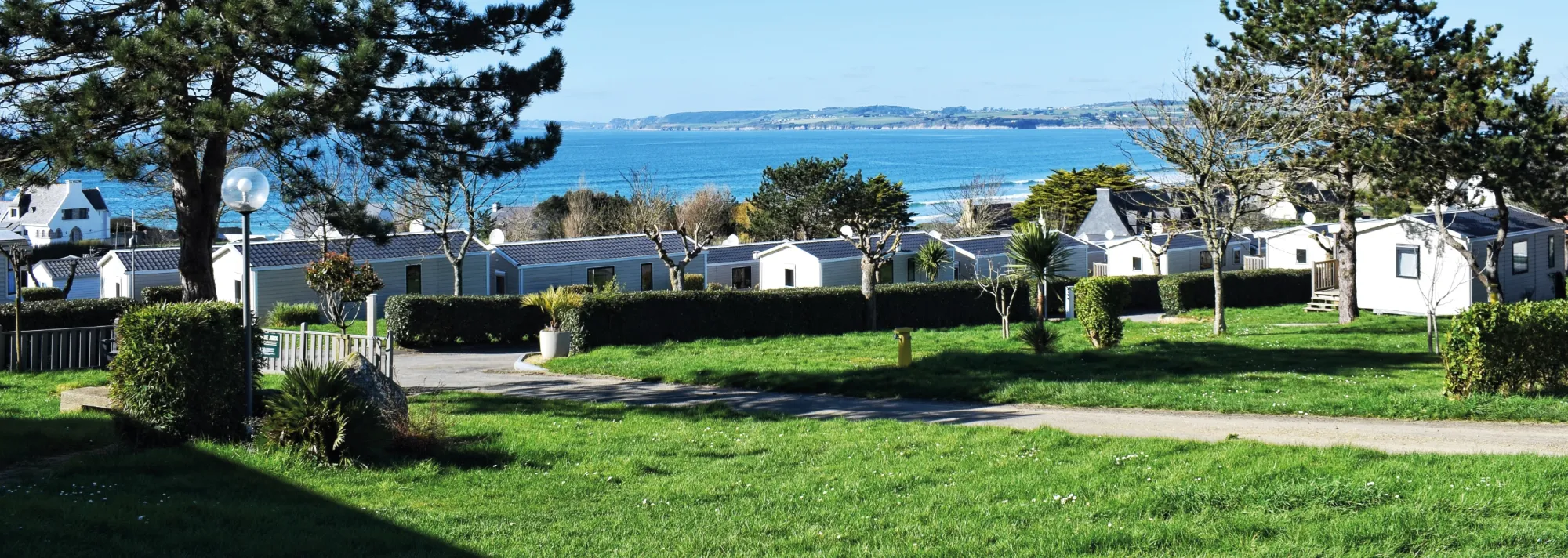
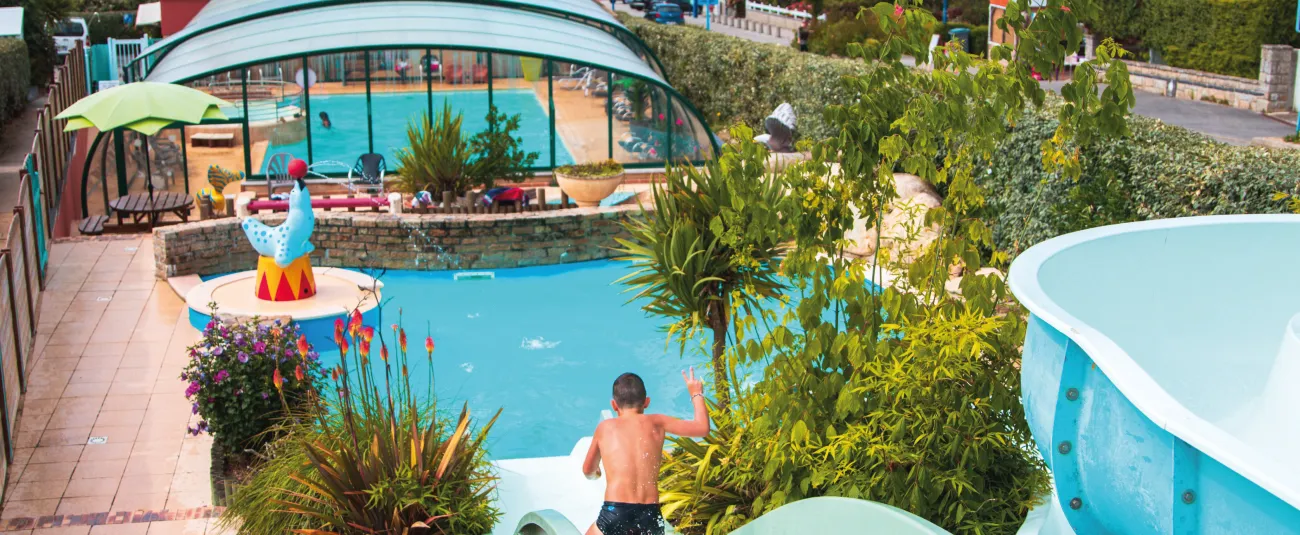
The 4-star La Mer d’Iroise Campsite in Plomodiern is the perfect place to enjoy a holiday while discovering Finistère and all its natural treasures. With 11 km of coastline featuring sandy beaches, secluded coves, rocky headlands and sea caves, Finistère is a paradise for hikers and surfing enthusiasts alike. The campsite, which boasts a beautiful water park, also offers a wide range of services to make your stay as comfortable as possible. It is also an ideal destination for walking enthusiasts, as the first long-distance hiking trail is located just 100 m from the campsite. It is also the perfect starting point for discovering the many activities to enjoy with family or friends throughout the region.
The La Mer d’Iroise Campsite in Plomodiern features 129 pitches and offers mobile home and chalet rentals, fully equipped with a television, crockery, kitchen utensils, duvets and pillows. These accommodations are set on plots of approximately 100 m², bordered by hedges and privacy screens to ensure peace and quiet throughout your stay. A private parking space is reserved for each accommodation, and an additional parking area at the campsite entrance is available for any extra vehicles.
What to do near the campsite?
South Finistère offers a wide variety of landscapes, from rugged coastlines to unspoilt natural scenery. Discover endless sandy beaches, dramatic cliffs, rocky headlands and charming fishing harbours, as well as the Monts d'Arrée and the Rias, two of Brittany's must-see natural attractions. Finistère is also home to numerous prehistoric sites and remarkable religious monuments. Explore its fascinating history and the many legends surrounding some of the region's most iconic locations.
The Crozon Peninsula
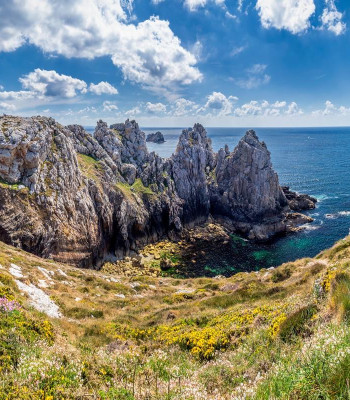
Located in the heart of the Armorique Regional Natural Park, the Crozon Peninsula is a paradise for hikers. From the banks of the Aulne estuary to the Pointe de Pen-Hir, passing through the lush coves of Cap de la Chèvre, you'll discover breathtaking landscapes that are as diverse as they are wild. Crystal-clear coves invite you to swim, while towering cliffs showcase the raw power of nature. Numerous walking trails lead to Pointe de Pen-Hir, overlooking the famous rock formations known as the "Tas de Pois", or to Cap de la Chèvre, where you'll enjoy panoramic views over the bay and the surrounding islands. You'll also have the opportunity to visit charming harbours and former fishing villages that have preserved all their authenticity and postcard-worthy appeal. On the Bay of Brest side, a visit to the abbey is also well worth your time.
Menez-Hom: The Celts' Magical Mountain
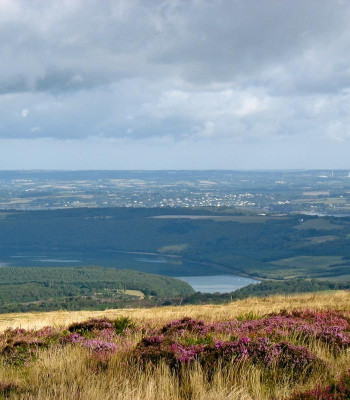
Rising to 330 metres above sea level, Menez-Hom is one of Brittany's highest peaks. It is also one of Armorica's sacred mountains, where stone cairns and megaliths still bear witness to the ancient ceremonies once held there. From the summit, overlooking the Bay of Douarnenez, you'll enjoy panoramic views of the Bay of Brest, the Bay of Douarnenez, Pointe de Pen-Hir and the Monts d'Arrée.
This protected natural site is easily accessible via walking trails and is also a favourite destination for paragliding enthusiasts. Along the way, you'll discover the Sainte-Marie-du-Menez-Hom Chapel. In addition to its parish enclosure, the chapel houses beautiful 16th-century statues and impressive 18th-century altarpieces, making it well worth a visit.
Douarnenez, its Four Harbours and Magnificent Bay
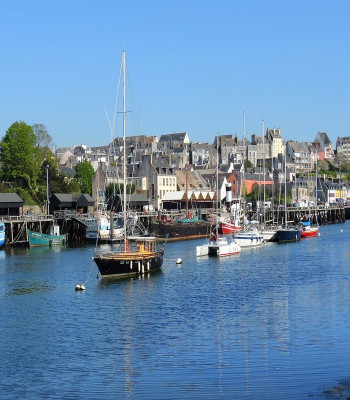
The town of Douarnenez, famous for its four harbours, is steeped in history. According to legend, it was built on the site of the ancient city of Ys, ruled by King Gradlon and swallowed by the sea. The town prospered thanks to its 16th-century trading port and its sardine fishing industry. Historic houses and churches in Pouldavid still bear witness to this prosperous era. Above Rosmeur Harbour, you'll also find old workshops and charming fishermen's cottages. Today, the colourful quays are lined with restaurants and cafés. Finally, the Plomarch coastal path offers magnificent views over the bay, its beaches and Tristan Island, while you enjoy the fresh sea air.
Visit Historic Ships and a Treasure Island
The Port-Museum is located beside Port-Rhu, the oldest harbour in the town. Five historic vessels are moored here and open to visitors: a lobster fishing boat, a river barge, an English tugboat, a flat-bottomed barge and a Norwegian coastal cargo ship. Exploring these authentic vessels is a fascinating experience for both children and adults. Opposite the Port-Museum lies Tristan Island, accessible at low tide. This enchanting island offers many surprises, including a botanical garden, orchards, ancient fortifications and a princess's house. During the guided tour, you'll discover the fascinating legends and hidden secrets of this mythical island.
Beaches and Swimming
Douarnenez has four beaches. Ris Beach, with its long stretch of sand, is the largest. Plage des Dames, located in the town centre, is ideal for families. In the Tréboul district, Sables Blancs Beach is dedicated to windsurfing, catamaran sailing and other water sports. Finally, Saint-Jean Beach, accessible via a walking trail, has retained its unspoilt natural charm. There's a beach to suit every taste. If you prefer warmer waters, the local thalassotherapy centre welcomes you with seawater heated to 31°C.
Locronan and its Architecture
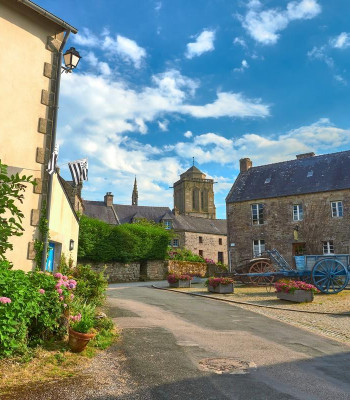
Locronan is officially listed among the Most Beautiful Villages of France. The village flourished in the 14th century thanks to the sailcloth weaving industry. During this prosperous period, magnificent granite houses adorned with finely carved dormer windows were built. The village square is the heart of Locronan, while the surrounding streets are pedestrian-only. Here you'll find traditional shops, including artisan bakeries and local boutiques. The Saint Ronan Church, adjoining the Penity Chapel, both decorated with striking gargoyles, forms an architectural ensemble well worth discovering.
Aquashow in Audierne
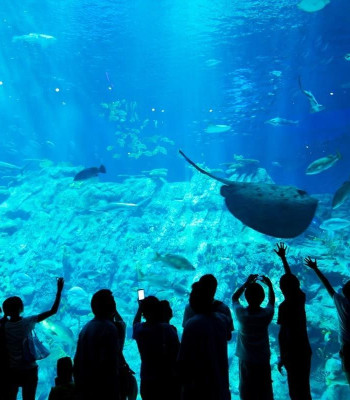
Located on the banks of the River Goyen, Aquashow offers an impressive bird show where both diurnal and nocturnal birds fly just above the audience. The performance ends with a spectacular demonstration of the Great Cormorant's underwater hunting skills. Aquashow is also home to aquariums featuring more than 160 species of fish and crustaceans, including sharks, octopuses, conger eels and many others. Visitors can also enjoy a touch pool and a variety of exhibitions designed to help them better understand marine life. A visit lasts around 2 hours and 30 minutes. Afterwards, you can relax with a drink or a meal on the venue's terrace built on stilts.
Océanopolis in Brest
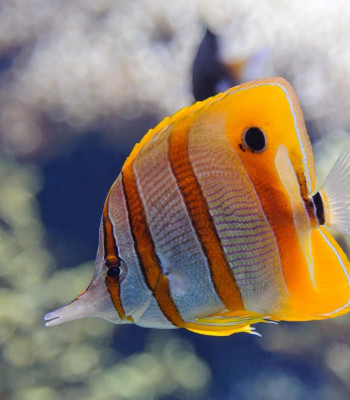
Océanopolis is one of Brittany's most popular tourist attractions. Divided into three themed pavilions—Polar, Tropical and Temperate—it offers an immersive journey into the marine world, helping visitors better understand the diversity of ocean ecosystems. Home to around 10,000 marine animals, including seals, otters, sharks and jellyfish, the park also offers MiniLab activities and behind-the-scenes sessions with animal keepers, where visitors may even help feed the seals. A restaurant and gift shop are available on site. As Océanopolis is extremely popular, online booking is mandatory.
Ouessant Island and the Molène Archipelago
At the heart of the Iroise Marine Natural Park lie Ouessant Island and the Molène Archipelago. The archipelago consists of around twenty small islands, although only two are inhabited: Quéménès and Molène. On Molène Island, you can discover the Beg Ar Loued archaeological site, which bears witness to a civilisation that has inhabited the island since the Bronze Age. A visit to the Island Environment Centre offers fascinating insight into the island's biodiversity while helping visitors better understand its history and the daily life of its inhabitants. Nature lovers may also be lucky enough to spot grey seals or dolphins, which are frequently seen in the surrounding waters. The archipelago is also home to many bird species, including the distinctive tern, easily recognised by its black-capped head.
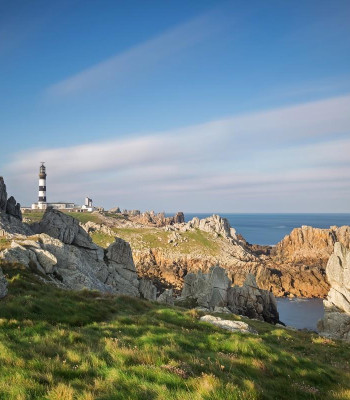
Beyond Molène, across the Fromveur Channel, lies Ouessant Island. Shaped like a crab's claw, the island stretches for approximately 7 km. It is surrounded by dramatic cliffs and rugged rocks, from which it is believed to derive its Celtic name, Ouxisama, meaning "the highest". Besides its spectacular scenery, the island is home to the remains of Villa Tempête, which once housed a fog trumpet. Visitors can also see the remains of an old foghorn that was once powered by horses.
Quimper
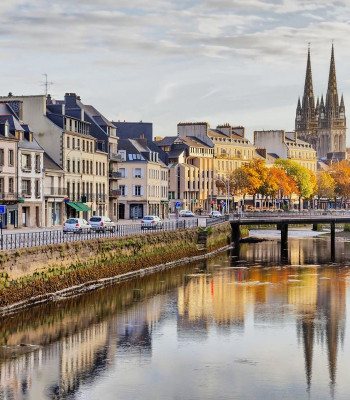
The narrow streets of Old Quimper are a delight to explore. Its half-timbered houses, winding medieval lanes and vaulted passageways have retained all their historic charm. Take time to visit the magnificent Saint-Corentin Cathedral, then continue your stroll across the footbridges spanning the River Odet, surrounded by lush greenery.
Quimper owes its name to its geographical location at the meeting point of the Steir and Odet rivers. The Celts called it Kemper, meaning "confluence". Later, the Romans developed Quimper into a thriving commercial town during the 13th century, attracting wealthy merchants and members of the French nobility, who built elegant mansions and private townhouses around the cathedral.
The construction of Saint-Corentin Cathedral took almost three centuries to complete. A masterpiece of Gothic architecture, its magnificent stained-glass windows and twin spires rising 76 metres into the sky give it an imposing appearance. As you wander through the cobbled streets surrounding the cathedral, you'll discover elegant historic residences reflecting Quimper's prosperous past, along with streets bearing Celtic names, such as Rue Kéréon, whose name means "shoemaker".
Quimper is also renowned for its traditional faience pottery, which originated in the Locmaria district. Here you'll find the famous Breton bowls decorated with a couple dressed in traditional Breton costume. The Quimper Faience Museum introduces visitors to the expertise of the region's master ceramic makers. If you'd like to watch the various stages of production and observe the meticulous work of the hand painters, the Henriot Faience Factory offers guided tours of its workshops.
The Quimper Museum of Fine Arts is one of the richest art museums in France, featuring works by Boudin, artists from the Pont-Aven School, Tal-Coat, Max Jacob and many others. The Breton Departmental Museum, housed in a former bishop's palace, offers an excellent introduction to Brittany's artistic and cultural heritage.
Breton Gastronomy
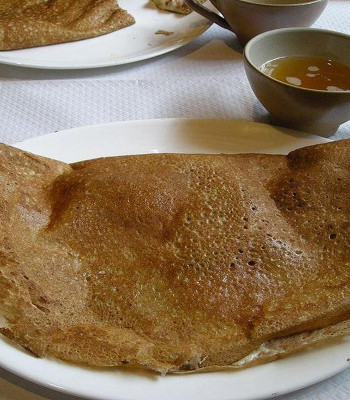
While Brittany is famous for its crêpes and savoury buckwheat galettes, it is also the perfect place to enjoy delicious oysters and tender scallops. Combining the finest produce from both land and sea, Breton cuisine offers a rich variety of flavours. There is something for everyone, from crêpes topped with salted butter caramel and served with a glass of cider, to the irresistible kouign-amann, as well as the region's famous galettes. Those who prefer savoury dishes will delight in the fresh fish, shellfish and seasonal vegetables available at local markets. Whether you're travelling with family or friends, Brittany's cuisine is sure to become one of the highlights of your stay.